
Is elbow grease the secret? I think it might be.
Three overlooked benefits from a seasonal chore

Have you ever, in a dazed state of willful procrastination, just sat and stared at your keyboard or phone screen?
And then, upon staring, really looked at it, and snapped from your reverie in a single, clarifying thought:
Geez, that’s filthy.
If so, you are welcome here. Now, let’s talk about spring cleaning.
(def) Spring cleaning: the sudden primal urge after weeks of grime-encased winter to get your life together, already, and succumb to an intense and compulsive need to purge, dust, scrub, scour, and otherwise transform every surface of your environs into fresh, sparkly newness. Thank you, and you're welcome.
And so we find ourselves on the seasonal precipice of this very urge. I, for one, would like to cheer us into submission. Because, apart from the existential benefits of elbow grease for the soul, spring cleaning is a practice that presents a few additional perks you might otherwise overlook.
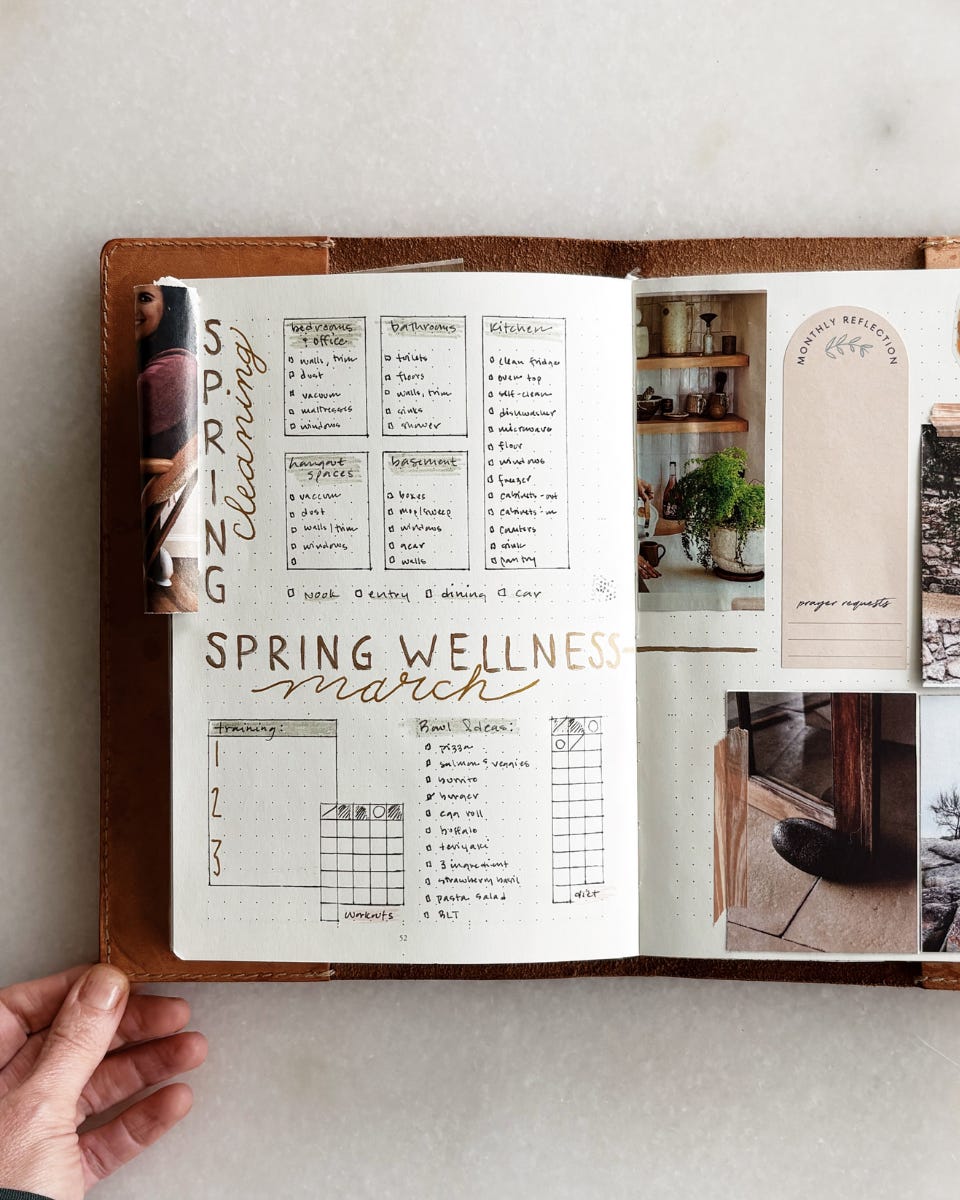
A Curious Side Effect: Contentment
Firstly, spring cleaning has a sneaky way of cultivating something we all crave but struggle to find:
Contentment.
I’m not sure what the exact science is here, but rest assured—if you spend an entire afternoon, say, removing your clothing and shoes from the closet,
dusting back into the far, dark corners,
vacuuming the nooks and crannies,
and then diligently putting everything back in a tidier state than before,
you will, in fact, find yourself impressed by how much you have and discover that your insatiable need to acquire more is dampened a bit.
The reason for this is that caring for what you already own naturally encourages gratitude and limits over-consumption.
Go on—test this. Prove me right.
Furthermore, cleaning flows neatly into mending and tending and fixing and maintaining.
And when we conserve the life of the things we have, we optimize the money we invested in them. This is the opposite of wastefulness, and is virtuous indeed.
Wait… Why Do I Own Five of These?
Related, spring cleaning also has a nifty way of reacquainting us with what we already own.
This conveniently presents us with an opportunity to notice excess in our lives — “Why on earth do I need five white tank tops when one will do?”
If nudged, this notice can grow into generosity — “I should give these tops away to someone who actually needs them.”
This, too, is the opposite of wastefulness.
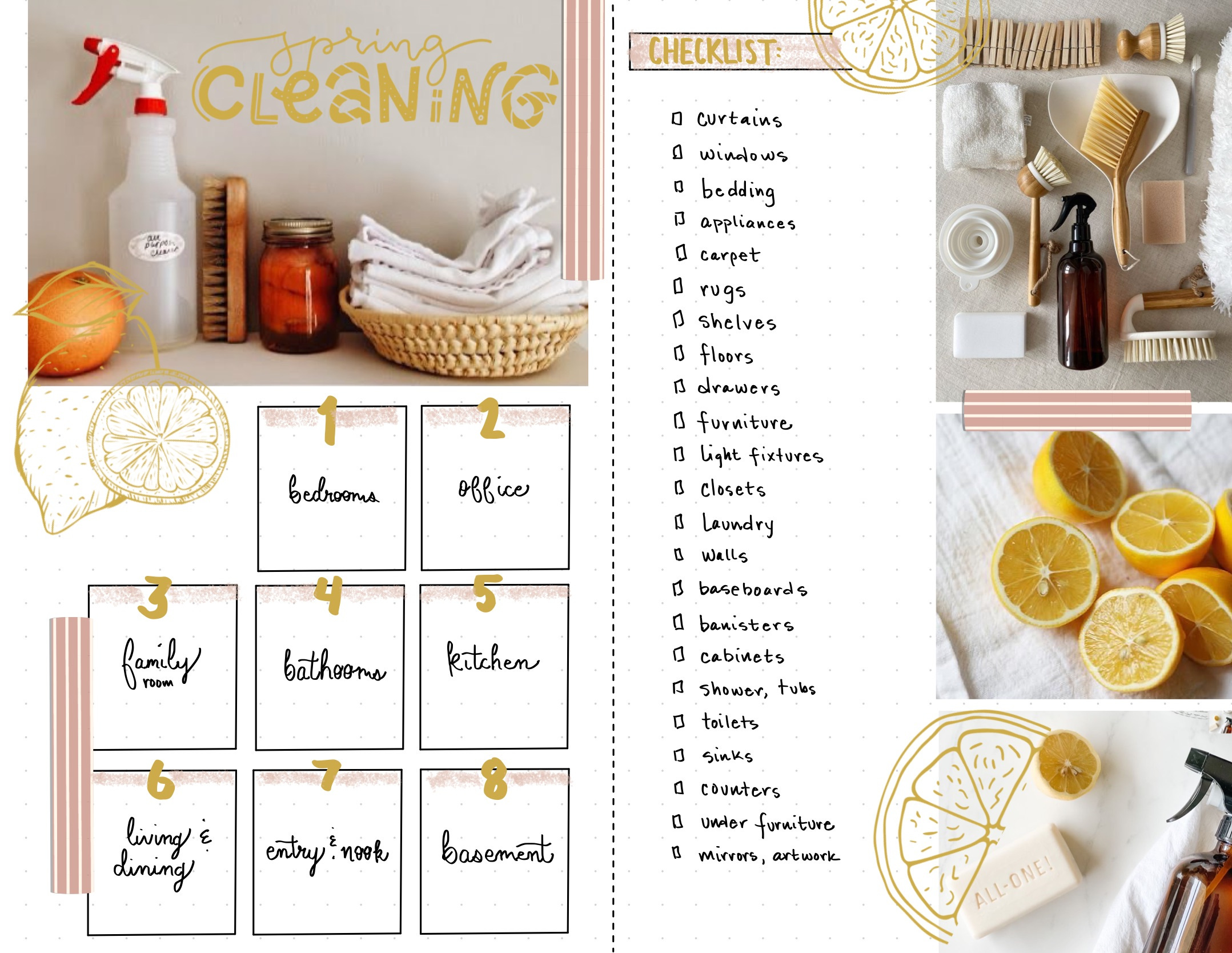
The Forgotten Skill: Resourcefulness
And lastly, if you’re creatively inclined, you might also spontaneously stumble into an innovative idea about how to repurpose an old thing into a newer, better thing. Again, I’m not sure about the science behind this, but I suspect that elbow grease might be a secret catalyst for this type of serendipity.
We know that repurposing is beneficial for its earth-friendly habit of not filling the landfill with yet another thing, plus its budget-friendly way of not emptying your wallet. But also, repurposing is uniquely gratifying because it cultivates another thing we crave but struggle to find:
Resourcefulness.
Resourcefulness has a comforting way of reminding us that creativity and out-of-the-box thinking can provide for our needs in surprising ways. We find that we can let go of some of our anxiety about tomorrow when today gifted us with a solution that we weren’t expecting, using materials we already had.
Reassuring, right? And couldn’t we all use a little more of that?

Hard Things, Good Things
I recognize that these are pretty deep thoughts about an activity that’s mostly a dirty chore. And that no amount of romanticism will likely convince you that a weekend spent in rubber gloves and a sponge will compensate for something you’d rather be doing.
That’s fair.
Still, I persist in the argument that often the hard things are the good things. Spring cleaning falls into this category. Let’s suit up and start to scrub. We won’t regret it.
Cheers, ~Steph